Sports Bra — How to Choose the Right One for Your Workout


Do you have one sports bra for everything — yoga, strength training, and running? If so, it's probably not right for at least one of those. A sports bra isn't just about keeping things in place. It's about the right support for a specific type of movement, a material that won't leave you in a soaked shirt, and a fit that makes you feel confident. In this guide, we'll show you how to choose a bra that actually works — for your workout, your body, and your style.
Why a Sports Bra Matters
Breast tissue has no muscles — it's held in place only by skin and Cooper's ligaments. These ligaments stretch with repeated impact movement and gradually lose their elasticity. And that's irreversible. A sports bra exists to minimise breast movement during exercise and protect these structures.
It's not just about aesthetics. Insufficient support during training can cause:
- Breast pain during and after exercise
- Irritation and chafing from friction
- Poor posture (hunching due to discomfort)
- Loss of motivation — if you're not comfortable, you're not giving 100%
Support Levels — What You Need for Each Workout
What is a support level? It's the degree to which a bra restricts breast movement. The higher the impact of your workout, the more support you need.
Low Support
Ideal for: yoga, stretching, Pilates, walking. These activities involve minimal vertical movement. A low-support bra is lightweight, comfortable, and non-restrictive. Typically a simple compression design without underwire or cups.
Medium Support
Ideal for: strength training, cycling, hiking, dance. During strength training you move in a controlled way, but some exercises (like burpees in a superset or box jumps at the end of a session) require more than the minimum. Medium support is the most versatile category — most women will find their everyday gym bra here.
High Support
Ideal for: running, HIIT, CrossFit, skipping rope, boxing. High-impact activities generate the most breast movement — during running, breasts move in a figure-eight pattern, not just up and down. A high-support bra has wider straps, a firmer underband, and often a racerback construction for better stability.
| Workout | Impact Level | Recommended Support |
|---|---|---|
| Yoga, Pilates | Low | Low Support |
| Strength Training | Low-Medium | Medium Support |
| Cycling, Hiking | Medium | Medium Support |
| Dance, Aerobics | Medium-High | Medium-High Support |
| Running, HIIT, CrossFit | High | High Support |
Compression vs Encapsulation — Which Type to Choose
Compression Bra
Works simply — presses breasts against the chest to restrict movement. Usually has no separate cups or underwire. It's comfortable, easy to put on (just pull it over your head), and more affordable. The downside? For larger sizes (C+), compression can be uncomfortable and support insufficient.
Works best for: low to medium-impact activities and sizes A-B.
Encapsulation Bra
Has separate cups that surround each breast individually. Offers better shape, individual support, and is more comfortable for larger sizes. Often features adjustable straps and hook-and-eye closure at the back.
Works best for: medium to high-impact activities and sizes C+.
Combined (Compression + Encapsulation)
Combines both principles — separate cups plus a compression layer. The highest level of support. Ideal for running and HIIT across all sizes.
How to Choose the Right Size
The right size is everything. Even the best sports bra is useless if it doesn't fit. Here's the process:
- Measure your underbust — snug but not tight. This is your band size.
- Measure across the fullest part of your bust — loosely, without compression.
- Calculate the difference — the difference between bust and underbust measurements gives you your cup size (A, B, C, D...).
- Test with movement — do 10 jumping jacks in the bra. If you feel significant bouncing or the straps slide down, it's not your size.
Tip: If you're between two sizes, go smaller for compression bras and larger for encapsulation bras. And don't forget to check our sizing guide — the measurement principles are the same.
Material — What Matters
Material determines whether you'll feel dry and comfortable, or like you're wearing a wet towel after 15 minutes of training.
Nylon-elastane blend — the top choice for sports bras. Nylon (polyamide) is softer to the touch than polyester, more abrasion-resistant, and pleasant on the skin. Combined with elastane (spandex), you get stretch, shape retention, and quick drying. The typical ratio is 78-90% nylon and 10-22% elastane.
Polyester-elastane blend — an equally functional alternative, often at a lower price. Polyester wicks moisture away from the skin and dries quickly. Elastane adds stretch and ensures the bra holds its shape even after ten washes.
Cotton — comfortable to the touch but unsuitable for training. It absorbs sweat like a sponge, gets heavy, takes ages to dry, and can irritate skin through friction. If you love the cotton feel, look for a blend (cotton + polyester), not 100% cotton.
What else to look for:
- Flatlock seams — flat seams that won't irritate skin even during intense movement
- Mesh panels — increase breathability where you sweat the most
- Antibacterial treatment — extends freshness between washes
By Bust Size — Practical Recommendations
Size A-B
You have the most flexibility in choosing. Compression bras will fit you perfectly for most activities. For strength training and yoga, a simple, lightweight bra without underwire is enough. For running, go for medium support — even smaller breasts need stability during impact movements.
Size C-D
Medium support is your minimum for any workout. For strength training, a compression bra works, but for running and HIIT we recommend an encapsulation or combined construction. Watch out for straps — thin spaghetti straps won't provide adequate support.
Size DD+
Priority number one: encapsulation construction with high support. Compression bras at larger sizes press breasts unnaturally and can be painful. Look for wider straps, a firm elastic band, and adjustable closure. Running and HIIT? Exclusively high support.
Why You Need More Than One Sports Bra
Just as you have different shoes for different activities, you need different bras for different workouts. Ideally at least two — one for everyday strength training and one for more intense activities.
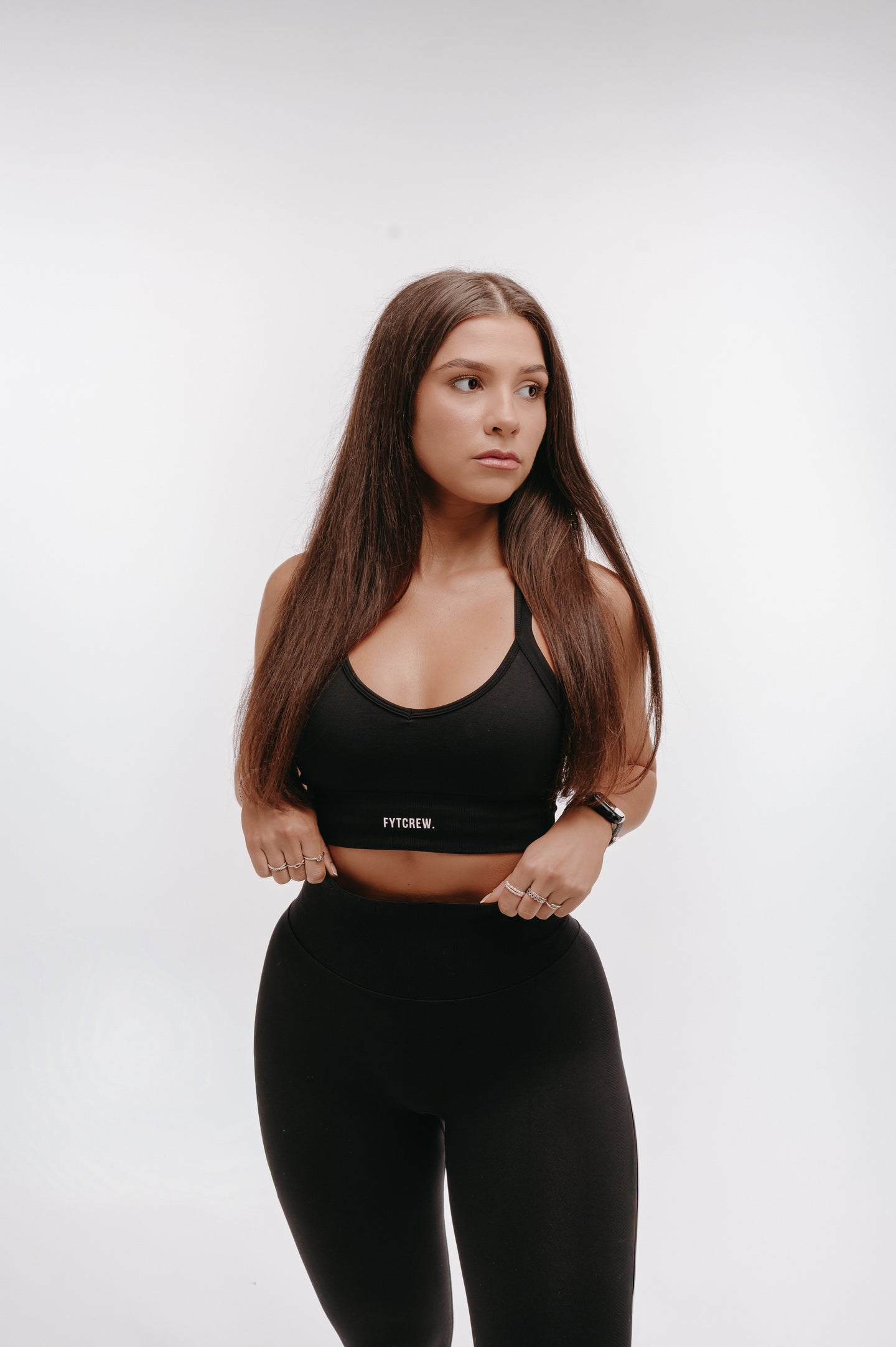
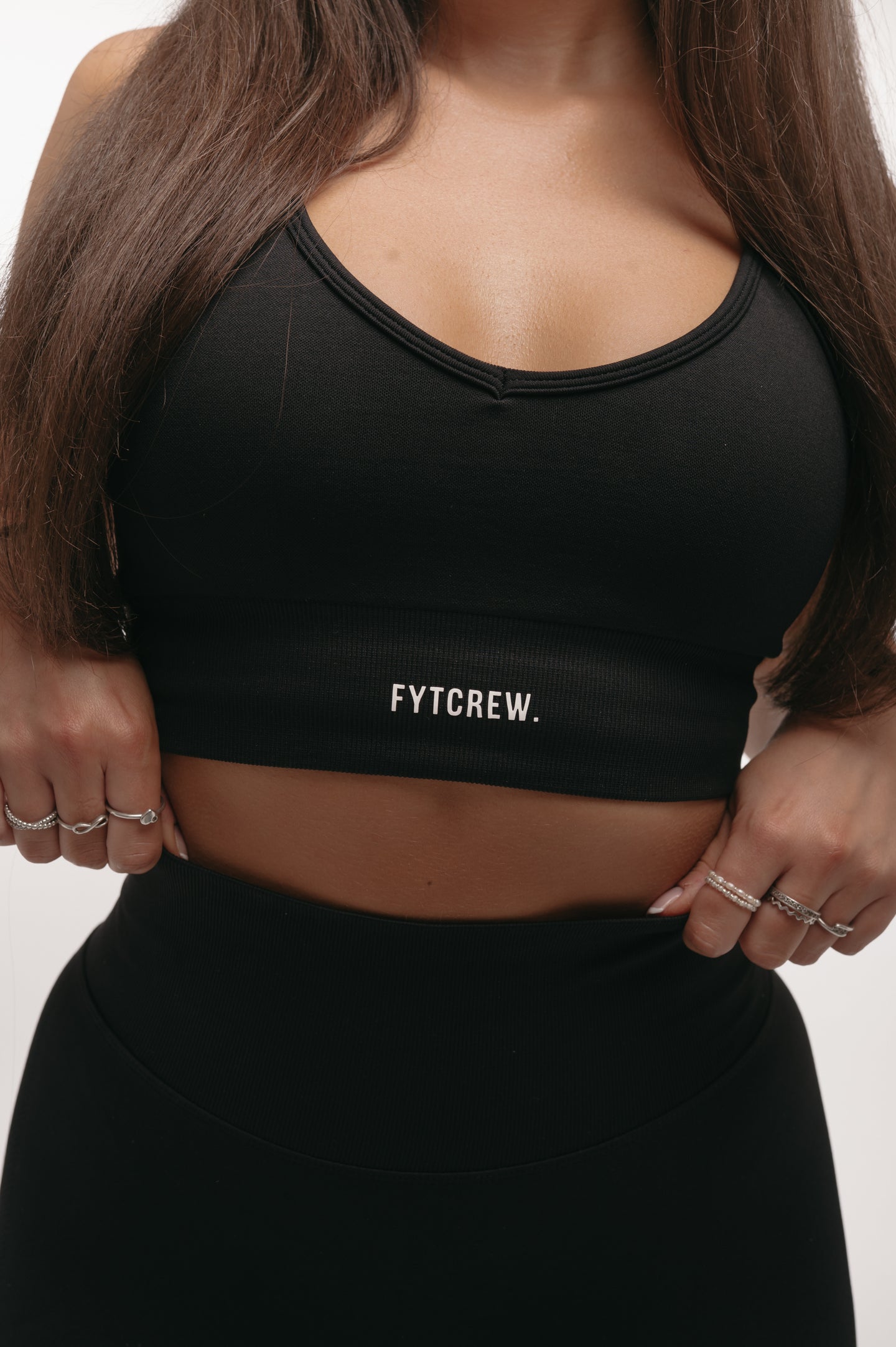
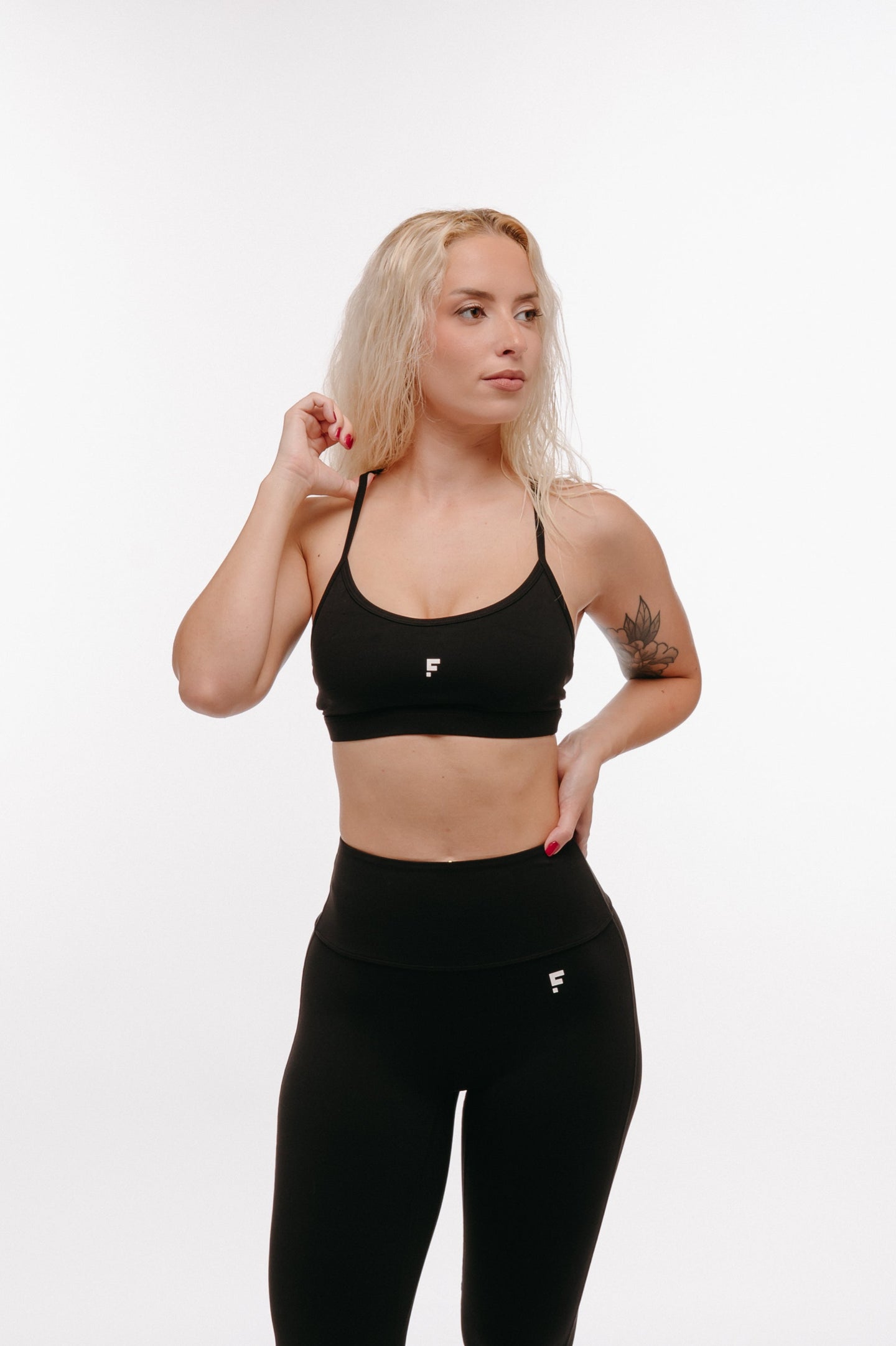
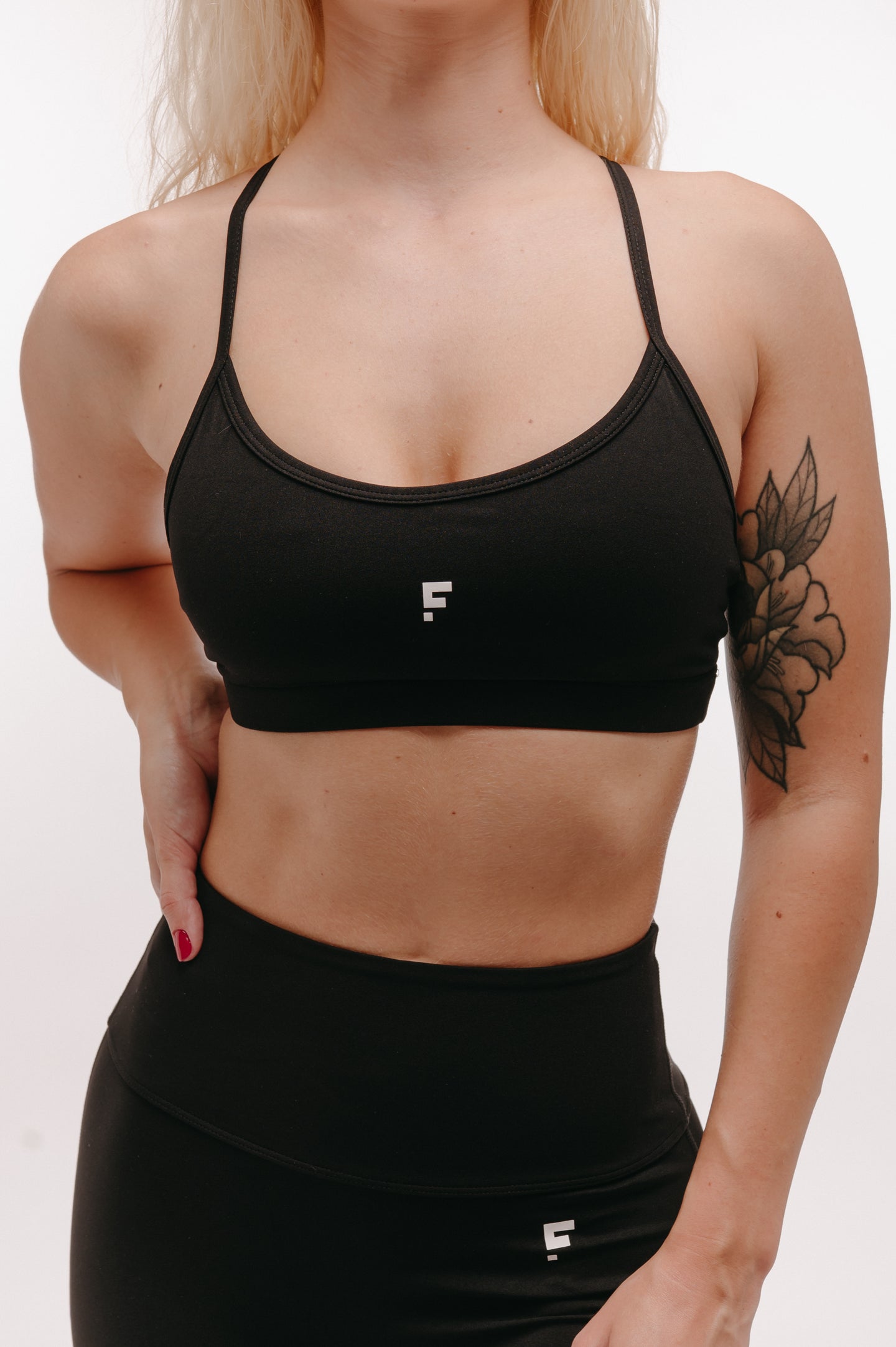
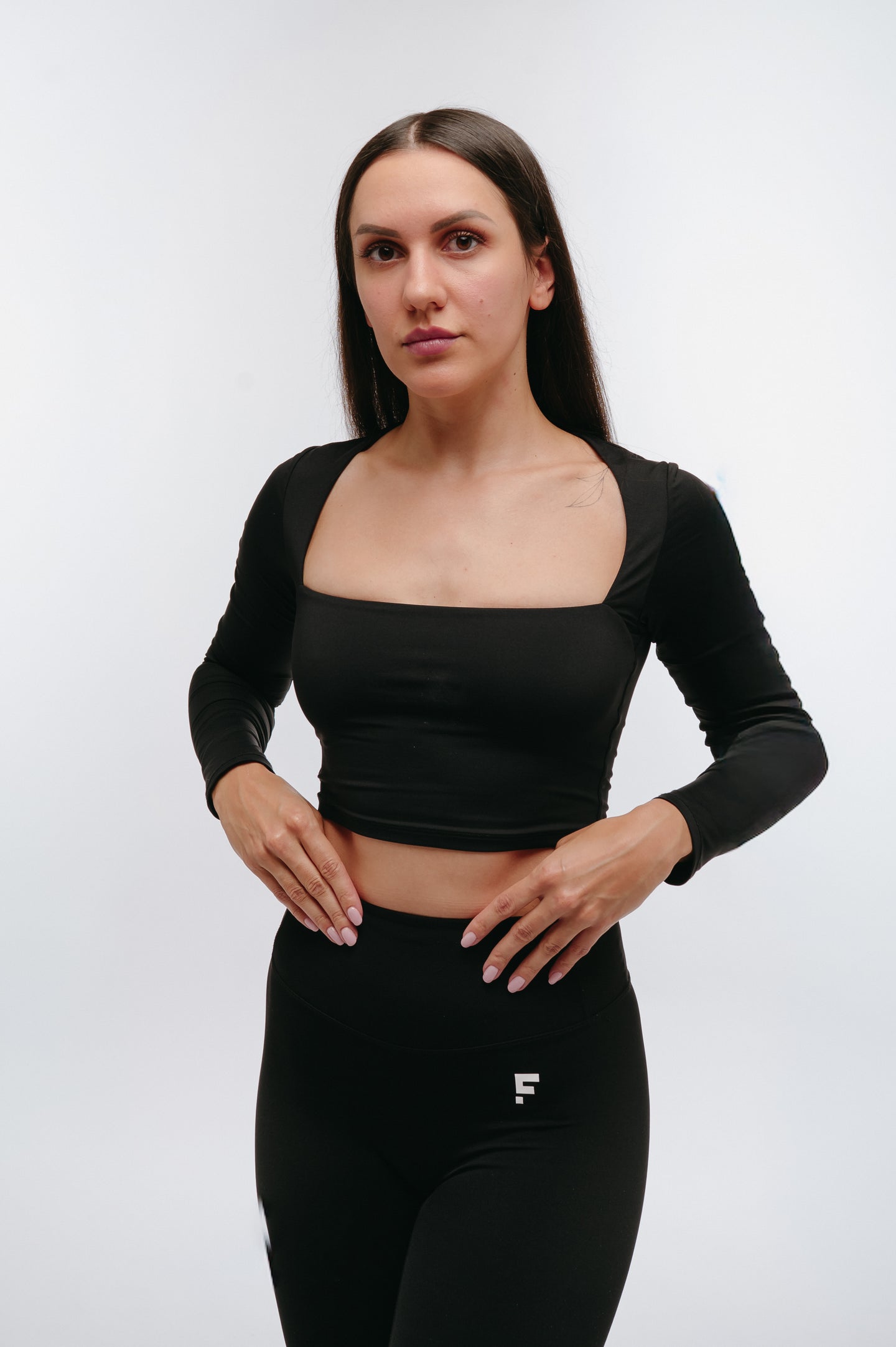
Our ELEVATE. Bra (90% nylon, 10% spandex) features firm, shaping fabric with an extended cut and an elegant X-design on the back — it stays in place and provides support even during more demanding workouts. If you're looking for something lighter for calmer days, the ESSENTIAL. Bra (78% nylon, 22% elastane) is made from soft, lightweight material that follows your body without restricting movement — comfort for yoga, stretching, and lighter strength training.
What to Watch Out for When Buying
- Underband — must fit firmly but shouldn't dig into your skin. It should be the main support element, not the straps.
- Straps — shouldn't slip or dig in. Wider = better weight distribution.
- Bounce test — do a few jumps in the fitting room. If your breasts move significantly, the support is insufficient.
- Breathing — the bra must allow a full breath. If you're struggling to breathe, it's too tight.
- Material against skin — check the seams before buying. Rough inner seams = chafing after 30 minutes.
Conclusion
The right sports bra isn't a luxury — it's a foundation of every woman's workout wardrobe. Choose by workout (low, medium, or high support), by size (compression vs encapsulation), and by material (nylon-elastane, not cotton). And most importantly — test it in motion, not just in front of the mirror. Your body will tell you if it's the right one.
Check out our sports bras — ELEVATE. Bra and ESSENTIAL. Bra — and find your next gym essential.